





The Amazon and Mesopotamia before the flood: Large-scale dams focus of new documentary
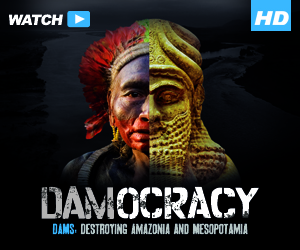
19 April 2013, Vienna – A documentary launched today, Damocracy, focuses on the cultural and natural heritage the world stands to lose as the foundations of two controversial large-scale dams are being laid despite widespread opposition and resistance – the Belo Monte dam in the Amazon, and the Ilisu dam in Turkey. www.youtube.com/DamocracyTV
Award-winning filmmaker Todd Southgate travels from the vast Amazon rainforest in Brazil to the mountains and plains of upper Mesopotamia in Hasankeyf, southeast Turkey, and visits communities threatened by the two major dam projects.
By focusing on impacts such as a permanent drought on the Amazon River’s ‘Big Bend’ and the sinking of a city in Turkey that dates back to the Bronze Age, Damocracy exposes the myth of large-scale dams as ‘clean’ energy. It reveals the undemocratic processes forcing these dams onto an unconsenting public, by governments steamrolling national laws and international regulations.
The documentary takes the name of the DAMOCRACY movement formed following the Rio+20 Earth Summit last year when governments failed to recognize the permanent destruction of cultural and natural heritage being caused by large-scale dams.
“Many people still think that hydropower is a green source of energy that can help to stop global warming. But in fact dams are one of the biggest threats to nature, wildlife and people. And in many cases they are bad for the climate either,” said Ulrich Eichelmann from Riverwatch, one of the founder organisations of Damocracy.
The Amazon Basin, set to host the Belo Monte dam, is home to 60 per cent of the planet’s remaining tropical rainforests. Belo Monte’s two reservoirs and canals will flood a total area of 668 square km of which 400 square km is standing forest.Scientists fear that hundreds of dams including the Belo Monte project planned in the Amazon Basin may cause the extinction of 1,000 fish species, which amount to one third of all fish species in the Amazon. The Belo Monte dam will also displace over 40,000 people including indigenous communities.
Damocracy makes the point that such dams are a methane menace. Dr Philip Fearnside of the National Amazon Research Institute (INPA) says forests flooded by Belo Monte’s reservoirs would generate enormous quantities of methane, a greenhouse gas that is 25 times more potent than carbon dioxide (CO2).
Work on the Ilisu dam in Turkey continues in defiance of court rulings halting the dam (1), and the withdrawal of funding from European Credit Agencies in 2009 when the Turkish government failed to meet almost all the criteria to protect the environment, cultural heritage and local communities. The dam will inundate an area that meets nine out of 10 UNESCO World Heritage Sites’ criteria (2). Over 35,000 people will be displaced. The Ilisu dam will affect five key biodiversity areas in southeast Turkey. Its impact will be felt as far as the marshes of Basra in Iraq.
“The price the world is being asked to pay for governments, such as those of Brazil and Turkey, to protect political and corporate interests is insane. Damocracy tells a story of resistance; it should not become a record of the loss the world failed to prevent,” said Engin Yilmaz, Executive Director of BirdLife International partner in Turkey (Doga Dernegi).
Damocracy is produced by Doga Dernegi, in collaboration with other founding members of the Damocracy movement: Amazon Watch, International Rivers, RiverWatch, Gota D’água (Drop of Water) Movement, Instituto Socioambiental (ISA) and Movimento Xingu Vivo para Sempre (MXVPS).
To watch the documentary visit: www.youtube.com/DamocracyTV


For more information:
www.damocracy.org
References:
1) The Turkish State Council ruled on January 7, 2013 in favour of the legal case filed by the Chamber of Architects and Engineers (TMMOB) against the construction of the Ilisu dam project without an Environmental Impact Assessment (EIA), ordering an immediate halt to construction. On April 5, the Environment Ministry again amended EIA regulations to bypass the latest court ruling and continue with the construction of the dam. This move is being challenged by civil society organizations in Turkey with new court cases challenging this decision being filed.
2) The area of Hasankeyf and the Tigris valley meets nine out of 10 criteria for World Heritage Status according to a report published by Istanbul University Professor Zeynep Ahunbay, who is also the former President of ICOMOS Turkey (the International Council on Monuments and Sites that evaluates nominations for World Heritage Status). The Turkish government refuses to nominate the site for protection.